
Hi readers!
This week’s blog post is going to focus on readings from the book The Lucifer Effect by Philip Zimbardo, which details the proceedings of the Stanford Prison Experiment.
In reading Zimbardo’s account of how the prisoners (who were not actually guilty of anything) and the jail guards took on their roles (Zimbardo, 2007), I got curious about the guards’ and the prisoners’ motivations. Specifically, it fascinated me how it was seemingly easy for the jail guards to become brutal, bossy and rude, and the prisoners to accept it. The distraught prisoners were made to look unanimous and were only called by their numbers in a dehumanizing way (Zimbardo, 2007). While it was an experiment, these occurrences are not a far cry from what occurs in prisons.
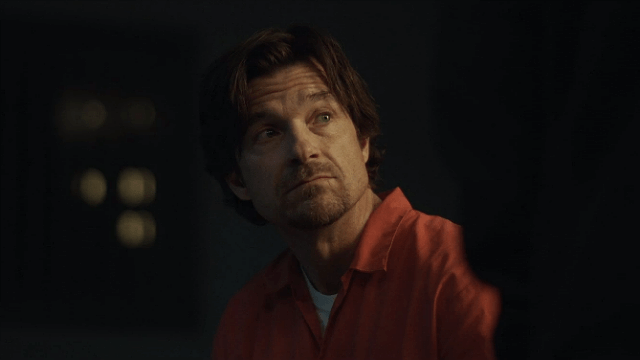
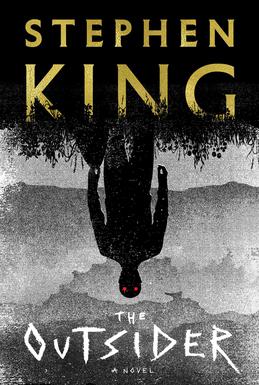
I recently started watching The Outsider, which is a TV adaptation of Stephen King’s novel (I highly recommend it!). In the show, Terry Maitland is accused of murdering a young, local boy, and is taken to a prison while he awaits a trial. Despite the fact that Terry maintains his innocence and there is quite a lot of exculpatory evidence, he still faces discrimination, threats and violence in prison. Another man in the same prison was accused of a similar crime ended up with his throat being split (Bernstein & Bateman, 2012). As an outside viewer, it was easy for me to think that Terry’s fellow inmates should leave him alone because I think that he has a likeable personality and that he’s innocent, but they have no prior knowledge of Terry. I do not understand why individuals who ended up in prisons would want to cause more trouble.
I looked at research that studies prison violence and found a lot of information that made sense to me. It became very clear to me that prisoners are at a huge risk of multiple forms of violent victimization. Here are the stats:
- 15% of inmates under the age of 21 were victims of violent attacks
- 12.5% of inmates have been assaulted at least once
- 1/3 of inmates have been threatened with violence (Worrall & Morris, 2012)
There are multiple perspectives that attempt to explain prison violence, however the deprivation perspective stood out to me. Being a prisoner causes one to behave in ways that are parallel with their conditions; not only being deprived of freedom but being confined (Worrall & Morris, 2012). It made sense that when individuals feel that they are backed into a corner, they do unimaginable things. In the context of evil, the majority of evil acts do not occur without some sort of precedent. Overcrowding in prisons was also correlated with violence, worsening the confinement that prisoners experience (Worrall & Morris, 2012).
In summary, I found the ease at which the participants of the Stanford Prison experiment took on their roles shocking. Obviously, I have learned about the experiment before, but it was surprising to me how the guards overlooked the need to be a decent person, even when dealing with “bad” individuals (Zimbardo, 2007). The Stanford Prison experiment is slightly outdated, and I had The Outsider in mind, so I looked into how modern prison violence could fit into this narrative. Researchers suggest that prison overcrowding and deprivation of freedom can make prisoners violent, suggesting that the violence is a product of the prison conditions (Worrall & Morris, 2012).
Do you think that prisoners are exceptionally violent because it is a collection of criminals or because of the conditions of being confined in prison?
References
Bernstein, A. (Director), & Bateman, J. (Director). (2020). The Outsider [Television series]. HBO.
Worrall, J. L., & Morris, R. G. (2012). Prison gang integration and inmate violence. Journal of Criminal Justice, 40(5), 425-432.
Zimbardo, P. (2007). The Lucifer Effect. New York, NY: Random House.
 Jessica's Evil Psychology
I thought the concept of overcrowding and coping with “bad” situations were interesting points pertaining to why people do bad things to one another – I hadn’t really thought that much about them before. But it definitely makes sense. Even in less intense situations, like being in the mall for example. Imagine it’s Black Friday and there are people everywhere, pushing and being rude and cutting in lines. Something inside of you just gets so frustrated and overwhelmed. Some people yell, some swear or gesture inappropriately. But interestingly, these aren’t things that we would normally do (if you’re a decent human being, I suppose). Those emotions arise in us when we feel out of control and overwhelmed, which when put in the context of prison violence, it makes a lot of sense.
LikeLike
Hey Jessica,
I really appreciated your take on this the readings, and found the stats you found to be very intriguing!
I agree with Kira that negative emotions due to the lack of space and increased frustration would make a lot of sensed pertaining to prison violence! I had also thought that this would also explain things like bar violence, aggravation in traffic and violence amongst concert goers. because even for situations where alcohol is consumed, the close proximity of people would increase the negative emotions and violent behaviours.
LikeLike
Hey Jessica,
I really appreciated your take on this the readings, and found the stats you found to be very intriguing!
I agree with Kira that negative emotions due to the lack of space and increased frustration would make a lot of sensed pertaining to prison violence! I had also thought that this would also explain things like bar violence and aggravation in
LikeLike
Hi Jessica! To me, your explanation of prison violence (deprivation of freedom & confinement) makes sense. With limited options, either real or perceived, normal people will do whatever they need to in order to survive. I wonder if this mechanism could also explain the evil behaviour observed in the guards? While they arguably had more freedom and weren’t physically confined – in my opinion, the way in which Zimbardo and his team set up the study significantly ‘confined’ how they guards were to behave, depriving them of true free will. They were manipulated in how they were to act and forced to take on a role they had no idea how to fill. In order to survive, aka get the $$ from participating in the study, I can see why some guards saw their behaviour as rational in the given context.
LikeLike