
Hello everyone!
After a very thought-provoking presentation by a classmate, most of our class discussion revolved around eugenics this week. The presentation focused on using psychedelics to remove violent tendencies from a person. Afterwards, different opinions regarding biologically influencing someone to be less evil were thrown around the room. It was compared to things like prescription medication (such as those used for depression and ADHD) and lobotomies as attempts to change someone. In my opinion, biologically altering someone to be less evil and violent is an infringement on their person. I compare it to giving someone a lobotomy on a smaller scale, whereas by giving someone psychedelics, you are not only affecting their evil habits in isolation. You’re also affecting their personality, their thoughts and their decisions.
I found this similar to the readings, where Roy Baumeister talks about blurred lines being a source of evil. He writes that we set boundaries for ourselves but when we cross those lines, or don’t honour those limits, then that’s when evil can ensue. I think that relates to this conversation, where we want to protect people, but at what cost? Is altering someone’s brain crossing the line?
If you could take the evil out of someone, would you? The issue with this, is that evil is quite often hard to spot. But, if you wanted to take the sadness from someone, how far would you go?
Recently, a trailer came out for a documentary on an infamous but interesting murder and I dove into the research.
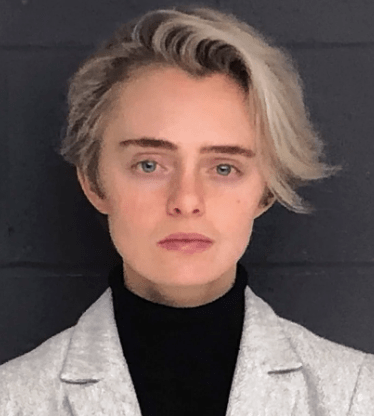
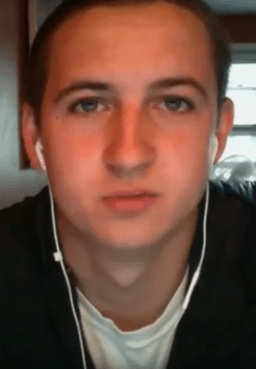
In 2014, Michelle encouraged and pressured her boyfriend to kill himself through texts and phone calls. Initially, it was thought to be a self-guided suicide when they found Conrad dead from carbon monoxide poisoning in his truck. Hundreds of texts and calls surfaced after Conrad’s death between the couple in which Michelle comforted him and told him he should end his life. The most alarming of all was the call where Conrad said he stepped out of the truck, but Michelle instructed him, “to get back in.” Both teens struggled with depression, and Conrad had a history of suicide attempts prior to this one (Truesdell, 2020).
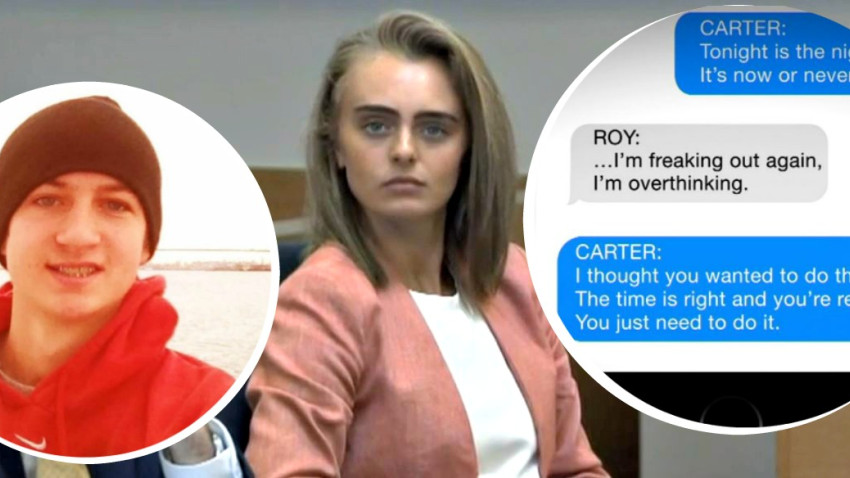
Was Michelle really just trying to help Conrad?
I chose to look at this incident from a murder-suicide perspective, because I don’t think that this case really fits like a mercy killing. What do you think? Could it be possible that Michelle intended to kill herself afterwards?
When I looked into the literature on suicides and homicides and how they relate, I found that Michelle’s homicide/Conrad’s suicide don’t fit the usual narrative. Homicides are not usually committed by someone with a mental illness, and they usually ensue after an argument of some kind, usually fights about drugs, finances, or romantic affairs. While 76% of suicides are committed by men, rates are highest in those aged 85 or higher (Podlogar, Gai, Schneider, Hagan & Joiner, 2018), which does not fit with Conrad. Interestingly, those who commit murder-suicide tend to be younger and have a history of interpersonal conflict (Podlogar et al., 2018).
In terms of psychological motivation behind murder-suicide, perpetrators integrate both an internalized and externalized sense of identity and include others in their suicide (Podlogar, 2018). Maybe this is what Michelle was doing, reflecting her own hardships onto Conrad. Further, murder-suicide is usually predicted by mental illness that can be catalyzed by the need for dominance, control and narcissism (Podlogar, 2018). Michelle telling Conrad to get back in the truck and ordering him to end his life reflects dominance to me.
For all of my fellow true crime documentary fans, this one is called I Love You, Now Die.
References
Podlogar, M. C., Gai, A. R., Schneider, M., Hagan, C. R., & Joiner, T. E. (2018). Advancing the prediction and prevention of murder-suicide. Journal of Aggression, Conflict and Peace Research, 10(3), 223-234.
Truesdell, J. (2020, January 15). Michelle Carter will be released from prison next week after 15-month sentence in suicide-text case. Retrieved from https://people.com/crime/michelle-carter-suicide-text-case-release-prison-next-week/
 Jessica's Evil Psychology
Hi Jessica!
I agree with your statement that biologically altering someone to be less evil and violent can be a breach of someone’s autonomy. However, there may still be a role for psychedelics in treating deviant behaviour. If someone willingly gives consent after being informed of the potential risks and benefits of the drug and takes it in a safe, supervised setting (such as the office of a clinical psychologist), psychedelics combined with appropriate psychotherapy could be a potentially viable treatment. One caveat of this proposition is that it requires the individual undergoing treatment to desire to change: this desire is not held by all people who commit acts of evil, thus making it likely unsuitable for certain criminal populations. That being said, until more research has been done on supervised psychedelic use in willing patients, this idea remains speculative. From your description of the case of Michelle’s homicide/Conrad’s suicide, it is clear that some people who commit evil acts have an underlying mental illness that affects their behavior. In cases where a mental illness acts as a catalyst for evil, treatment would likely benefit both the individual (by stabilizing them, reducing negative affect, etc.) and society (by preventing further acts of evil). In cases like these, would use of drugs, such as antidepressants, mood stabilizers, or anti-psychotics, be wrong? What do you think?
LikeLiked by 1 person
A lobotomy is a good equivalent to what people are considering when they want to remove evil from the brain. It’s a drastic measure that is very imprecise, looking at a narrow area of interest and ignoring the surrounding damage it does to the brain or the body. The question is how far people are willing to go and whether they are willing to cross moral lines for a moral issue. The case of Michelle Carter is very interesting, although it’s hard to characterize when it doesn’t quite fall under murder because she herself didn’t kill Conrad, but it isn’t quite a suicide because it was obviously coerced, which makes it even harder to explain.
LikeLike
Hello Jessica, thanks for your post! I found this idea similar to the readings too, when we cross the “line” we typically feel guilty or want to fix it, however, someone who is evil doesn’t set boundaries and crosses society’s lines. I really like the murder documentary you talked about, this really does give us a different perspective. You’re right when you say this story doesn’t fit the usual narrative. I like how you tied statistics from other scholarly sources into this murder story. I think that Michelle was in fact inflicting her own hardship on Conrad. I can’t wait until this full documentary comes out to see wat happened afterwards, could Michelle live with what she had done? I look forward to discussing more in the future!
LikeLike